


Item number : 04095
Net weight: 50 gr.
Product form: Dry mix
Manufacturer: Russian Roots
Is ginger useful for diabetes?
Useful properties of ginger in diabetes mellitus are determined by the fact that this amazing plant, in addition to 400 useful substances, in its composition contains the entire complex of essential amino acids that enter the body only with food. Therefore, ginger is a catalyst for all metabolic processes in the body, improving the digestive process (see ginger root-benefits and harms). The juice of this plant is able to reduce the level of bad cholesterol in the blood, regulate fat metabolism, thereby reducing the level of sugar in the blood, which is very important for patients with diabetes.
In addition, ginger has an antibacterial, expectorant, anthelmintic, laxative, tonic effect, and also stimulates blood circulation, relieves spasms, treats ulcers and skin diseases, increases male and female potency, is used for rheumatoid arthritis and rheumatism. Ginger root contains essential oil, vitamins C, B1, B2, potassium, magnesium, sodium, and zinc.

How to use ginger root for high blood sugar
Follow a diet for patients with diabetes is simply necessary, using ginger at the same time you can give fresh dietary products flavors and additionally get mineral complexes, nutrients and reduce blood sugar. In addition, most often diabetes occurs in people who are overweight or obese, and ginger contributes to weight loss. It is best to use ginger in the form of fresh juice or tea.Ginger
Important!!!
It should be used only for those patients who do not take anti-sugar medications, and they manage to control their sugar levels with a diet, because the simultaneous use of these drugs and ginger increases the effect of drugs and the sugar level can drop very much, which is extremely dangerous.
The use of ginger in diabetes should only be in coordination with the endocrinologist.
If you overdose with this plant, you may experience vomiting, diarrhea, nausea, and allergic reactions.
Allergies can occur not only from overdose, but also in people who are prone to various allergic reactions, so it is worth starting to take the root with minimal doses.
It should be borne in mind that ginger on the shelves of our supermarkets is of imported origin, and as you know, all imported products of plant origin are processed with chemicals to increase the shelf life, and ginger is no exception.
To reduce the possible toxic effect of these products, ginger should be cleaned before use and placed in a container with water for an hour.

When using this root, blood pressure may decrease and heart rate increases, so do not abuse this tool for people suffering from hypotension and having serious heart diseases.
Since ginger has a warming property, it can not be used at high body temperature,as it will increase the heat.
Ginger tea:
Treatment of diabetes with ginger root is possible in the form of juice or tea. To make tea, you should peel a piece of root, soak it in cold water for an hour, then grate it or cut it into thin shavings. Put the chips in a thermos and pour boiling water. Apply before meals for half an hour three times a day, adding to traditional or herbal tea.
The juice of ginger for diabetes:
To make the juice-the root of ginger should be grated, and then squeezed through cheesecloth. This juice can be drunk 2 times a day, but no more than 1/8 of a teaspoon

Ginger and diabetes in children
Ginger is not only an amazing seasoning for cooking, it also has medicinal properties, so it is used for many diseases and, in particular, for diabetes. Ginger is a reed plant, it reaches a height of 2 meters. Its useful properties have been known for a long time. It is native to China, Western India, and Southeast Asia, and has been known in Europe for about 2000 years
Chemical composition and properties of ginger.
Ginger contains hundreds of useful substances, including a complex of essential amino acids – lysine, methionine, phenylalanine and others. Its characteristic smell is given by essential oils. Starch, oleoresin, and TARIC acid were found in the plant. Ginger root contains all the main vitamins, including phosphorus, magnesium, calcium, zinc, iron, sodium and potassium. Due to the peculiar taste of ginger, it is widely used in the food industry as a spice. It is used for the production of bitter liquors, punches, in England – ginger beer. In Slovak cuisine, a wonderful root is indispensable when baking traditional ginger cookies. Mixed with salt, they are flavored with meat, fish, boiled chicken and vegetables. Ginger gives an exquisite taste to puddings, soups, rice dishes, and game.
Medicinal properties of ginger.
increases immunity by strengthening the immune system,
reduces blood clotting,
the peculiar taste of ginger helps digestion, the spice stimulates the formation of gastric juice and removes bile,
ginger has a diaphoretic effect and gives a wonderful effect for fever,
expectorant effect,
analgesic property (recommended especially for headaches and menstrual pain)
light sedative-doctors recommend ginger for irritability,
excellent prevention of bowel cancer;
anti-spastic agent, so it is used as a carminative,
an excellent remedy for nausea (recommended for motion sickness)
Ginger for diabetes
Ginger for diabetes is an important helper in the treatment of the disease, since it:
reduces weight by regulating fat metabolism,
improves blood circulation and strengthens the walls of blood vessels,
reduces " bad " cholesterol and breaks down cholesterol plaques,
lowers blood sugar levels by increasing glucose consumption by cells,
strengthens the immune system, increasing the body's resistance, fights fatigue and lethargy.
Contraindications in the use of ginger in diabetes
Endocrinologists treat ginger root well, but there are certain contraindications to its use. Ginger tea can only be taken by children who do not receive anti-sugar medications. It is also not recommended to take it for bleeding and low blood pressure. In some children, ginger can cause allergies. Ginger should not be given to children with gastritis, duodenitis, esophageal reflux. Ginger can cause heart palpitations, so it should be treated with caution if a child has heart disease that causes arrhythmia. Ginger dilutes the blood, so it should not be given often to children who suffer from frequent nosebleeds.
Type 1 diabetes and ginger
Ginger for type 1 diabetes is not recommended by endocrinologists. With insulin-dependent diabetes, it is necessary to adhere to the prescribed treatment regimen.
Features of treatment of type 2 diabetes with ginger
Ginger root for type 2 diabetes is not just allowed, but also recommended. It has a low glycemic index and can be added to any dishes to give them a specific taste and aroma. Especially doctors suggest ginger tea, with prolonged use of which you can get a good effect, as it helps to control blood sugar.
How to store ginger root?
Ginger powder should be stored in an airtight container in a dark place. Ginger root for medicinal purposes should be stored in the refrigerator in the zone for vegetables.
How to use ginger root for diabetes?
Ginger root is now available in stores in any form-fresh, dried, pickled, in the form of powder, in chocolate, in the form of individual pieces of the root, in candied fruits, etc. of Course, ginger in chocolate and candied fruits should not be given to children suffering from diabetes.
The pharmacy sells ground ginger powder, you can also find a tincture or decoction of ginger. But it is better to buy fresh root and make ginger tea or broth at home.
When buying ginger root, you should pay attention to a clean, strong fruit, without darkening and damage.
Ginger recipes for diabetes
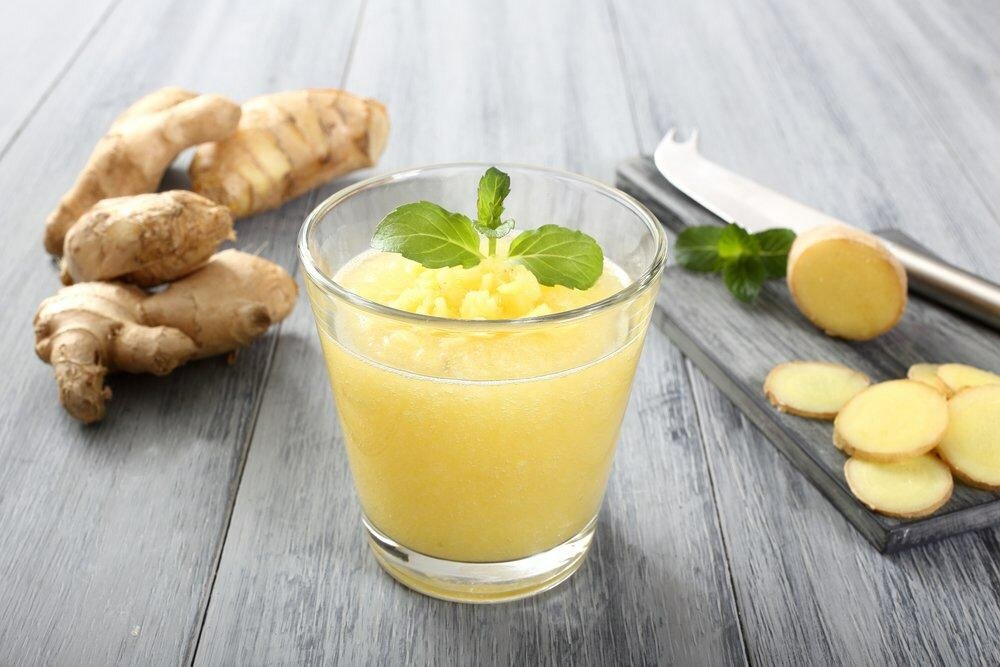
The juice from the ginger.
The fresh root is grated and squeezed through a sieve. The resulting juice is added 2 drops per 100 ml of water and drink 30 minutes before meals.

Ginger tea.
Most often, ginger root tea is used. It is necessary to take a piece of root from the little finger, wash it thoroughly with water, peel it off and cut it into transparent slices with a sharp knife. Place in a teapot and pour boiling water. Infuse for 20-30 minutes. The resulting ginger tea should be drunk in several SIPS throughout the day. It can be added to various drinks (tea, coffee) and just water. If the ginger is kept in hot water for a long time, it begins to turn bitter. But this is a matter of taste. For tea, you can also use dried ginger.
Ginger tea with additives.
You can add lemon to the ginger kettle. A special flavor will give the drink cardamom, cinnamon or mint leaf. If the child is not allergic, add a little honey and (or) orange. But honey should be added only to the cooled water, so that its useful properties do not disappear. You can find your recipe by experimenting with different additives..
Article about Diabetes